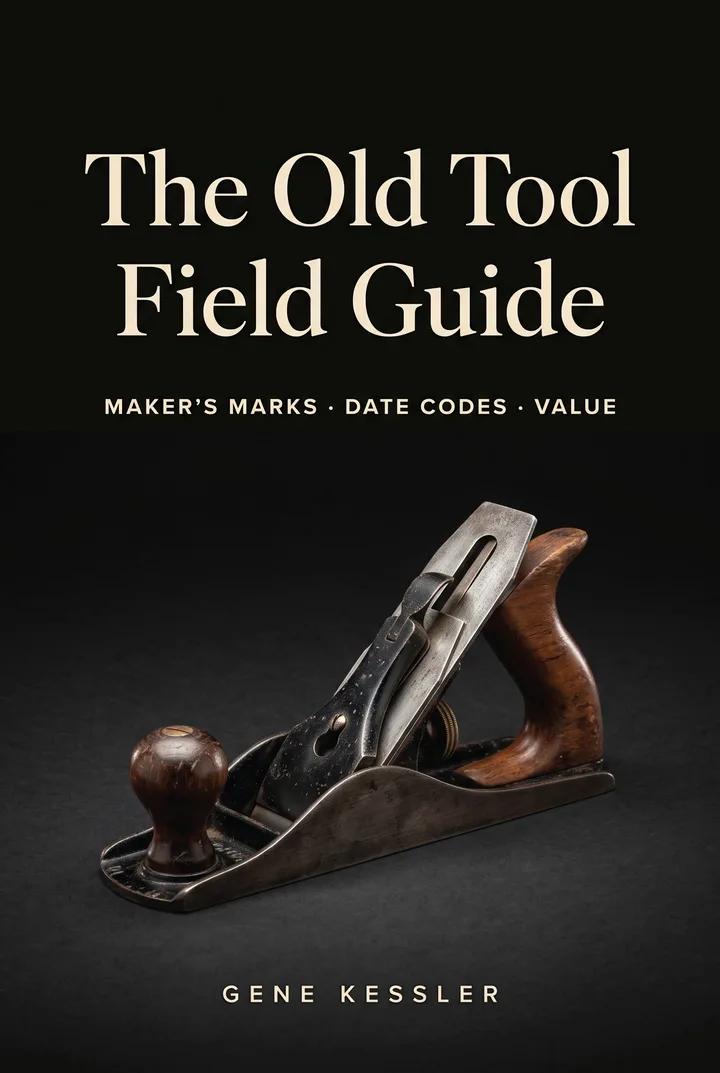
Somebody's father died and there are four toolboxes in the garage. Or there's a card table at a farm auction with a coffee can of wrenches on it for twenty dollars.
Either way it's the same question, and you've got about a minute to answer it: is any of this worth something?
It is, and the answer is on the tools themselves. The men who made them stamped them — makers, patent dates, country marks, letter codes — and most of those stamps are still there under the rust, saying who made it, roughly when, and whether it was built for a tradesman or for a bargain bin.
Read the stamp and a box that looked like scrap steel sorts itself out in an afternoon. A few pieces are worth real money, a good many are worth using for the rest of your life, and some of it is parts.
The trouble is that the first thing most people do to an old tool is the one thing that can cost them the most: take a wire wheel to it, sand the marks off, repaint it. A morning's work, and what was worth two hundred dollars is worth thirty.
Five piles, not a price list
Price guides go stale inside a year of printing. Tiers don't. Everything in the book sorts into these five, and the book shows you how to tell which is which with the tool in your hand.
- Parts. Cracked, pitted through, pieces missing. Still useful for keeping a better one alive.
- A good user. Worth cleaning gently and working with for the rest of your life. Most of the box lands here, and that's not a disappointment.
- Worth selling. Common enough to sell easily, good enough to be worth the trouble of listing.
- Worth keeping back. The ones collectors are looking for, and the details that put a tool in this pile instead of the one above it.
- Call a specialist. Rare enough that a wrong sale — or a wrong cleaning — costs real money. The book tells you when you're holding one.
The box in the garage
- There are four boxes and you don't know if it's scrap or a month's wages.
- Half of it says Craftsman and nobody can tell you who actually made those.
- You've heard there's money in old planes, but not which ones, or why.
- Somebody has already told you to put a wire wheel on it.
- You've passed up a table because you couldn't tell a good saw from a wall decoration.
- Your father's plane is on a shelf and you'd like to put it back to work properly.
What's in the 123 pages
- Where every maker stamped, and what the marks mean. Logo eras, patent dates, country-of-origin lines, and who really made the Craftsman, Keen Kutter and other store-brand tools, down to the letter codes.
- Date tools on the spot with plain tables for Stanley planes, Disston saws, Case knives, Plomb, Snap-on, Vise-Grip and the rest.
- Cleaning that doesn't kill the value. Gentle rust removal, oiling and storage — and the five things that wipe out a tool's worth in a single afternoon.
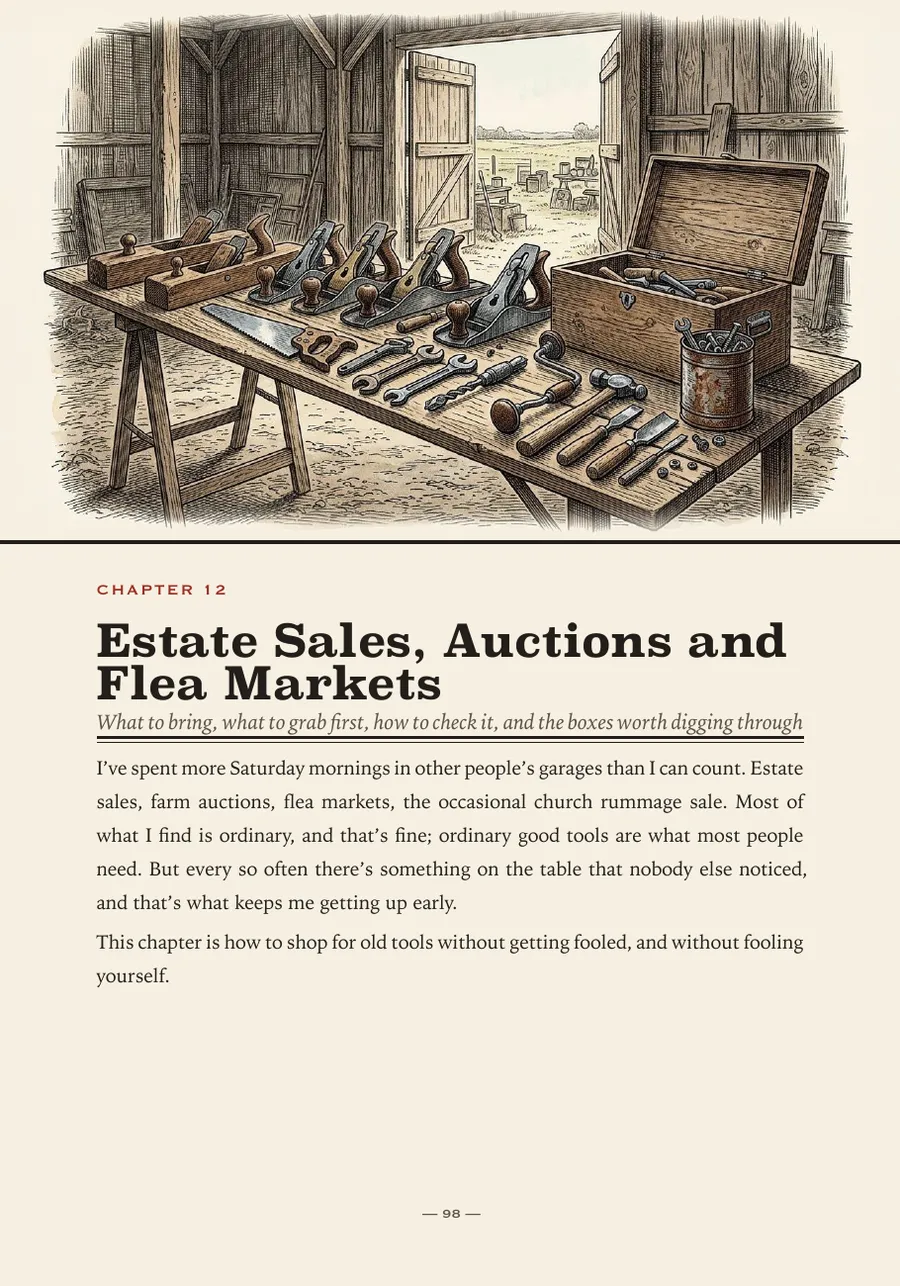
- Estate sales, auctions and flea markets. What to grab first, the one-minute checks that catch repairs and damage, and which boxes are worth digging through.
- Hanging a handle properly, on an axe or a hammer, so the head stays where you put it.
Four real pages
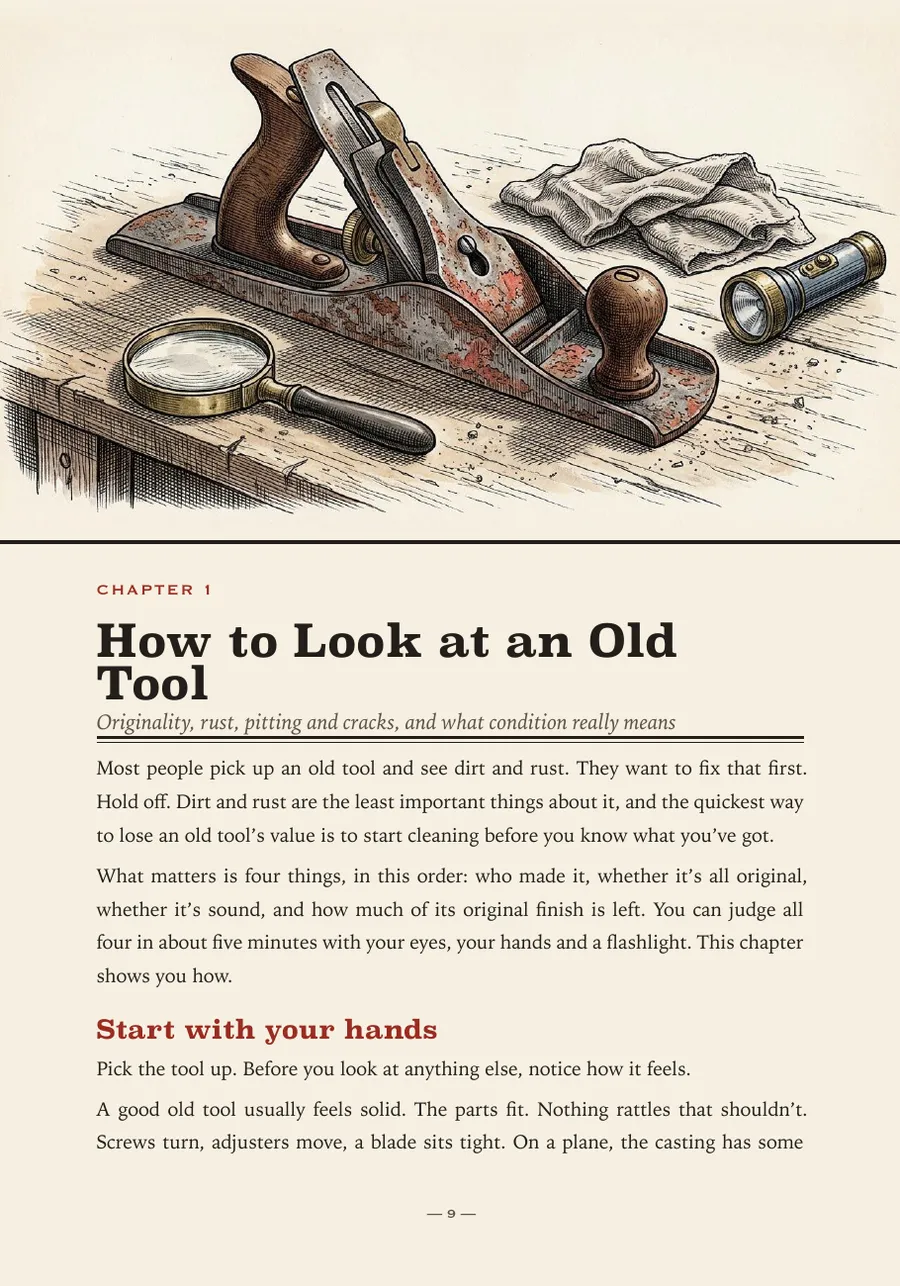
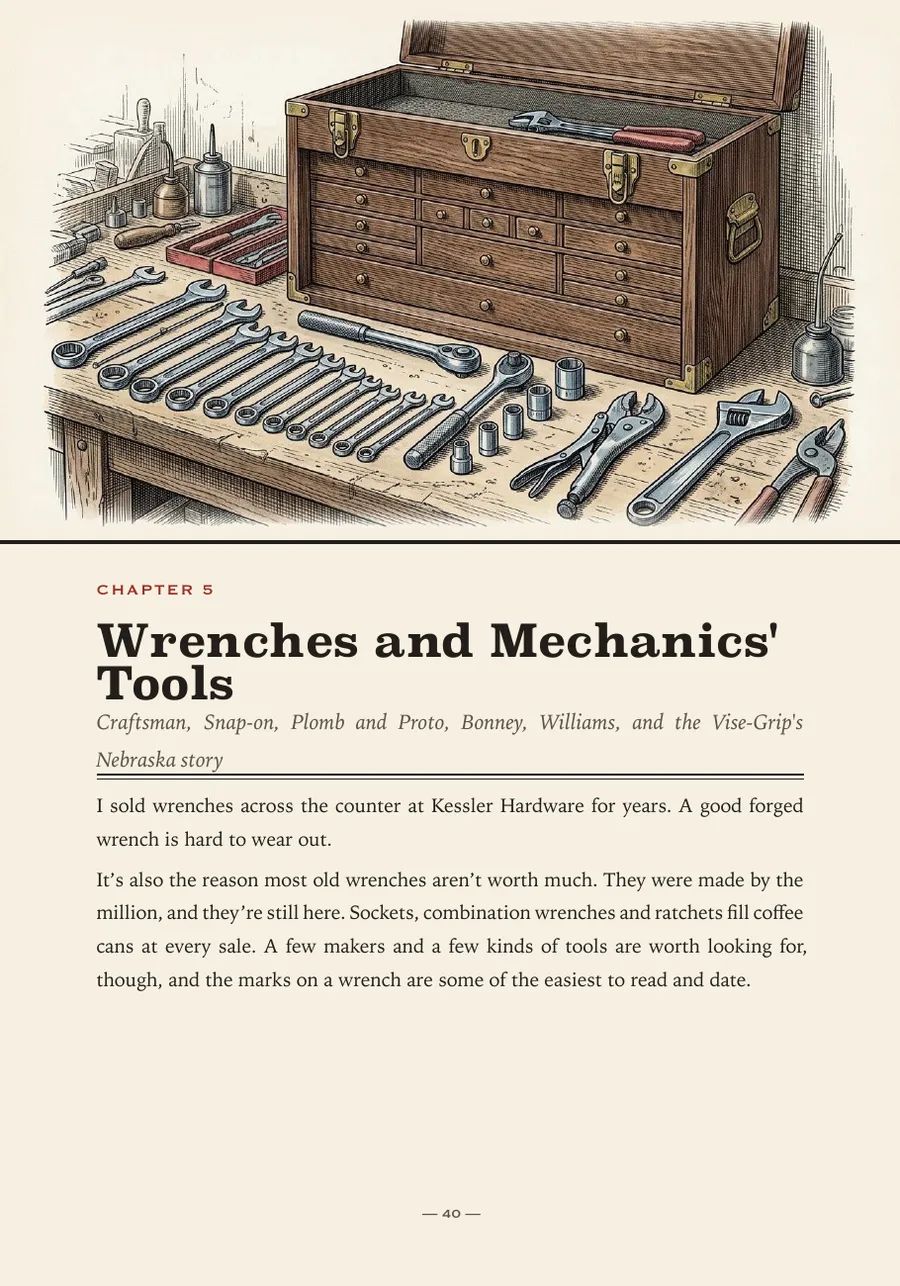
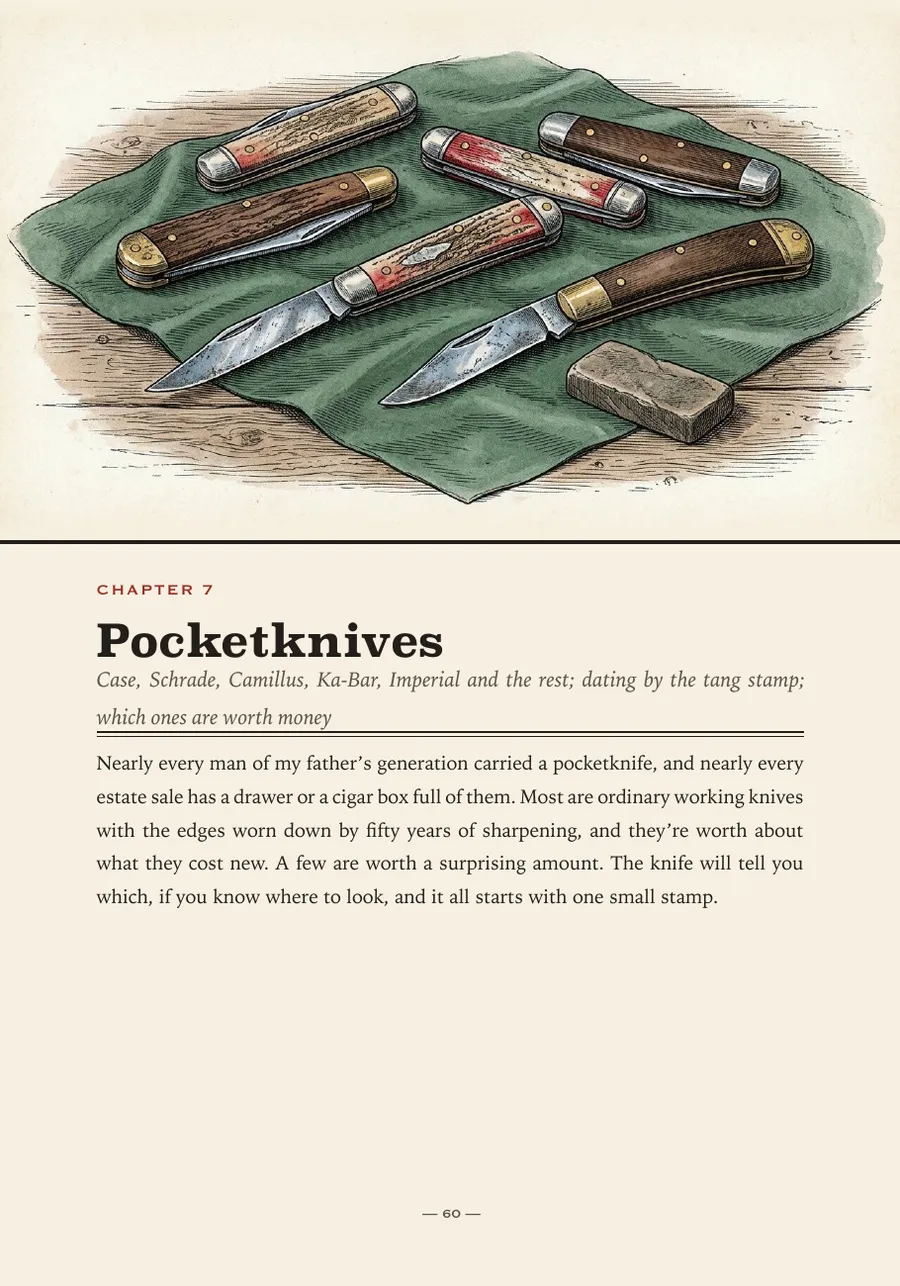
The Old Tool Field Guide
$29 · PDF · 123 pages · Instant PDF download
Everything in the book
- Introduction: What's in the Box
- 1. How to Look at an Old Tool
- 2. Reading the Marks
- 3. Hand Planes
- 4. Saws
- 5. Wrenches and Mechanics' Tools
- 6. Hammers, Axes and Striking Tools
- 7. Pocketknives
- 8. Braces, Chisels, Drawknives and Rules
- 9. Hardware-Store Brands
- 10. What Makes Value
- 11. Cleaning Without Killing Value
- 12. Estate Sales, Auctions and Flea Markets
- Appendix A: Maker Index
- Appendix B: Date-Code Tables
- Appendix C: Condition Grading Guide
- Appendix D: Checklists to Print
- Appendix E: Glossary
The details
- Format
- Illustrated PDF ebook, full color
- Length
- 123 pages, 18 chapters
- Page size
- 7 × 10 in – reads well on a tablet, computer or phone
- Printing
- Print any page for your own use. Checklists included.
- Copy protection
- None. Download it and keep it.
- Delivery
- Instant. Download straight after you pay.
Who it's for
- You've inherited tools and want to know what you have before you decide anything
- You hunt estate sales, farm auctions and flea markets
- You buy old tools to use, and want the ones that were made properly
- You're clearing a house and don't want to give away the one good piece
- You want current prices — you get value tiers and the reasons behind them instead
- You want a woodworking course: this is about identifying, valuing and keeping tools, not joinery

I'm Gene Kessler. Bucyrus, Ohio.
My father's Stanley No. 5, bought new in 1948, sits on the bench in the garage and I used it this week. Dot has opinions about how many planes are on the shelf above it. I buy and sell at estate sales and auctions, I clean and tune what comes in, and I keep too many — so this book is partly me explaining myself.
Go out and look in the box.
Read it for 60 days. If it's not for you, I'll refund it.
Email support@oldhands.co within 60 days of buying and you get your money back in full. No questions, no forms, and you keep the file.
Questions
Is this just Stanley planes?
No. Planes get a chapter, and so do saws, wrenches, hammers and axes, pocketknives, braces and bits, chisels, drawknives, and measuring and marking tools.
Can I use it for tools that aren't marked?
Yes. A fair bit of the book is placing unmarked tools by their shape, their weight, their hardware and where the maker put things.
Will it tell me what my tool is worth in dollars?
It'll put it in a tier and tell you exactly why it's in that tier. Dollars change every year; the reasons don't.
How do I get it after I pay?
Checkout is handled by Whop, a payments company. The moment you pay, the PDF is in your Whop account to download, and the link is emailed to you as well. You can download it again any time.
Is this a printed book?
No. It's an ebook: a PDF you download straight after paying. You can print any page, or the whole thing, for your own use.
Will it open on my phone?
Yes. It's an ordinary PDF, so it opens on any phone, tablet or computer. A tablet or computer shows the pages best.
What if I don't like it?
Email support@oldhands.co within 60 days and you get a full refund. You don't need to give a reason.
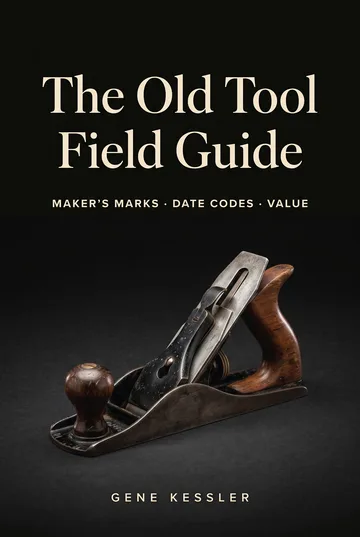
About what one good plane goes for.
$29 once, and the maker index, the date tables and the condition guide are in the back to print.
- Instant PDF download
- 60-day money-back guarantee
- No copy protection – yours to keep
One-time payment. Sales tax or VAT is added at checkout where it applies.
Read the stamp. Go out and look in the box.