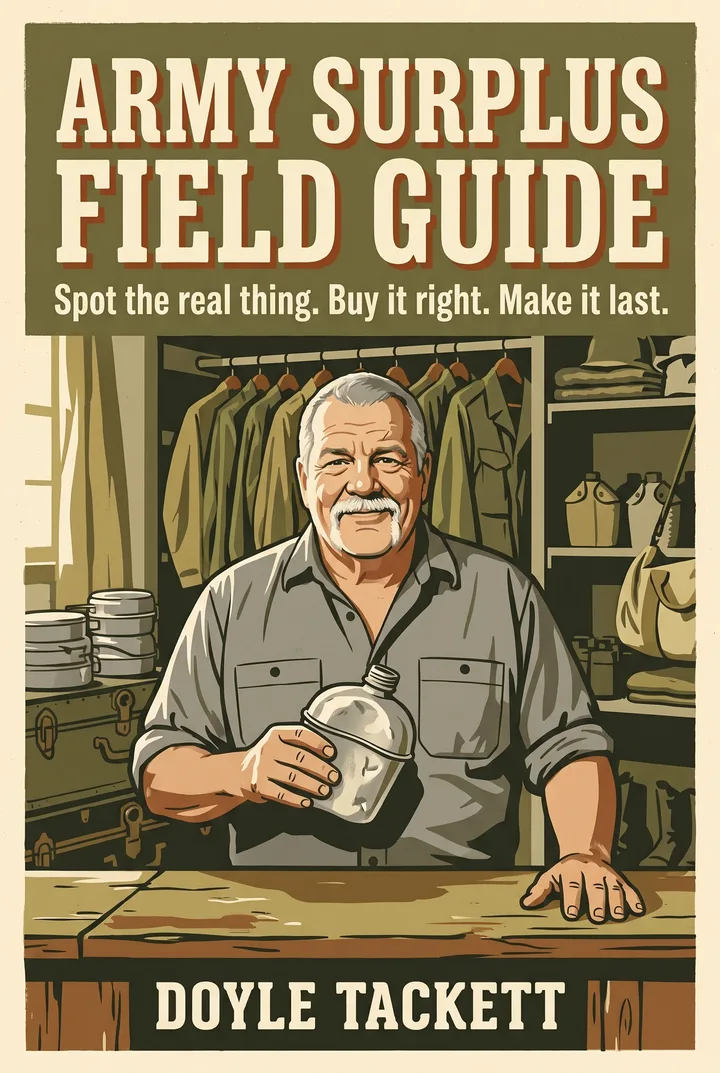
There are two jackets on the rack and they look the same. One is forty dollars and one is ninety.
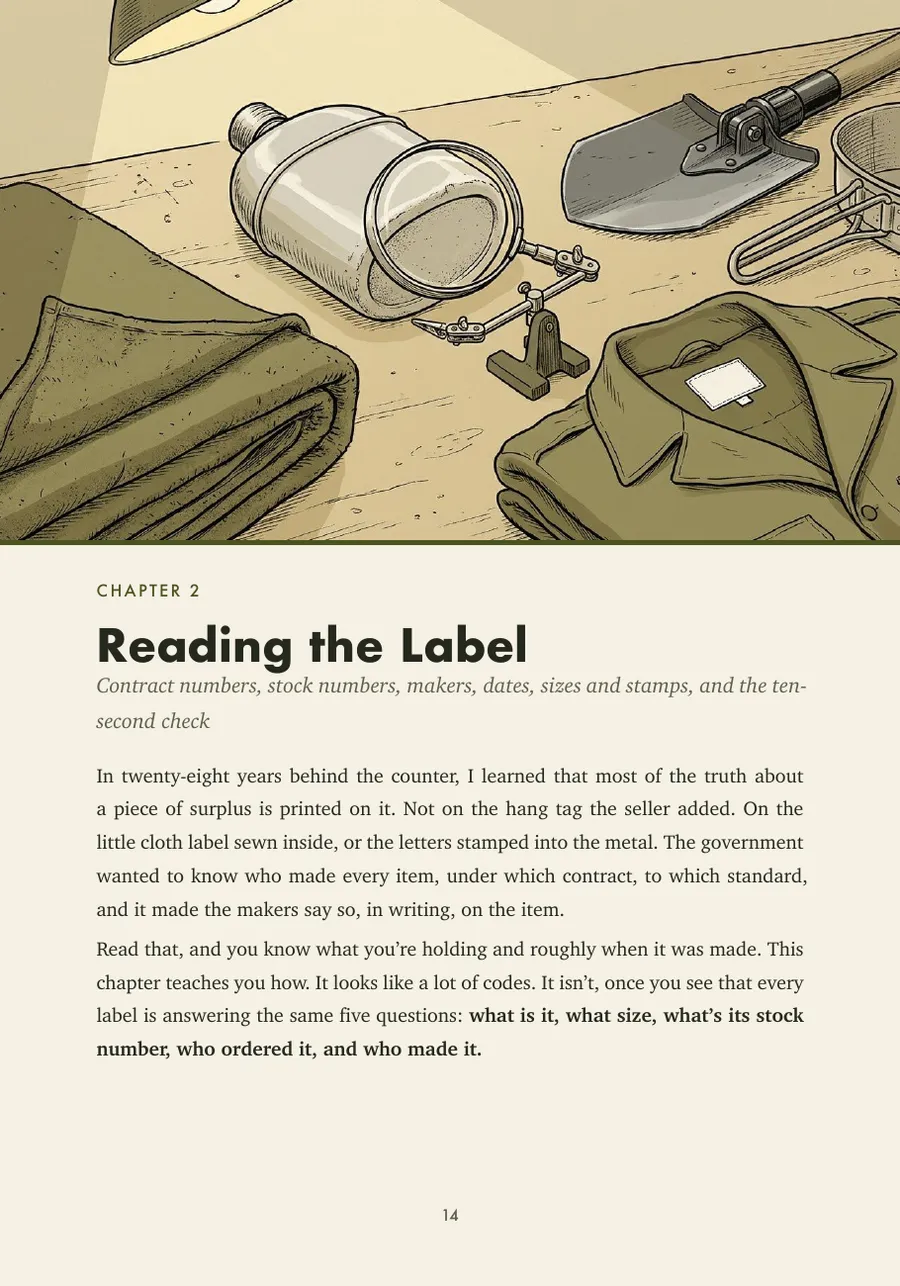
The difference is printed inside, usually on a label about the size of a playing card, in numbers nobody ever explains to you. A contract number. A stock number. A maker. A date.
Learn to read that label and the whole store changes. You stop buying things because they look old and start buying them for what they are. You'll also walk straight past about half of what's on the floor, and that's the part that saves you the most money.
If you've been buying surplus a while
- You've bought something "military style" and worked out later it was built to a price, not to a spec.
- You own a field jacket and couldn't say within twenty years when it was made.
- You've paid good money for a common piece because it looked the part.
- There's a wool blanket in your house you're half afraid to wash.
- You've wondered which of the masks, filters and old compasses in the case are the ones to leave alone.
- You've walked out sure there was something good in there and you'd walked past it.
None of that gets fixed by browsing longer. It's a reading problem, and surplus is the most honest market there is about this: nearly everything worth knowing is stamped, woven or printed on the piece itself.
Built to a spec, not to a price. The spec is still on it. This book teaches you to read it.
The ten-second check
What I'd do with a piece across the counter, laid out so you can do it in a store aisle with a flashlight and your reading glasses on.
- Find the label. Where each kind of garment and bag carries it, and what a missing label does and doesn't tell you.
- Read the contract number. Who made it and roughly when, out of a line of digits most people's eyes slide over.
- Read the stock number. What the piece actually is, in the government's own words rather than the seller's.
- Check the cloth and the hardware. The three giveaways that say reproduction before you've even looked at the price tag.
- Then pick it up. Weight tells you what it cost somebody to make it. It's the oldest test there is and it still works.
What's in the 124 pages
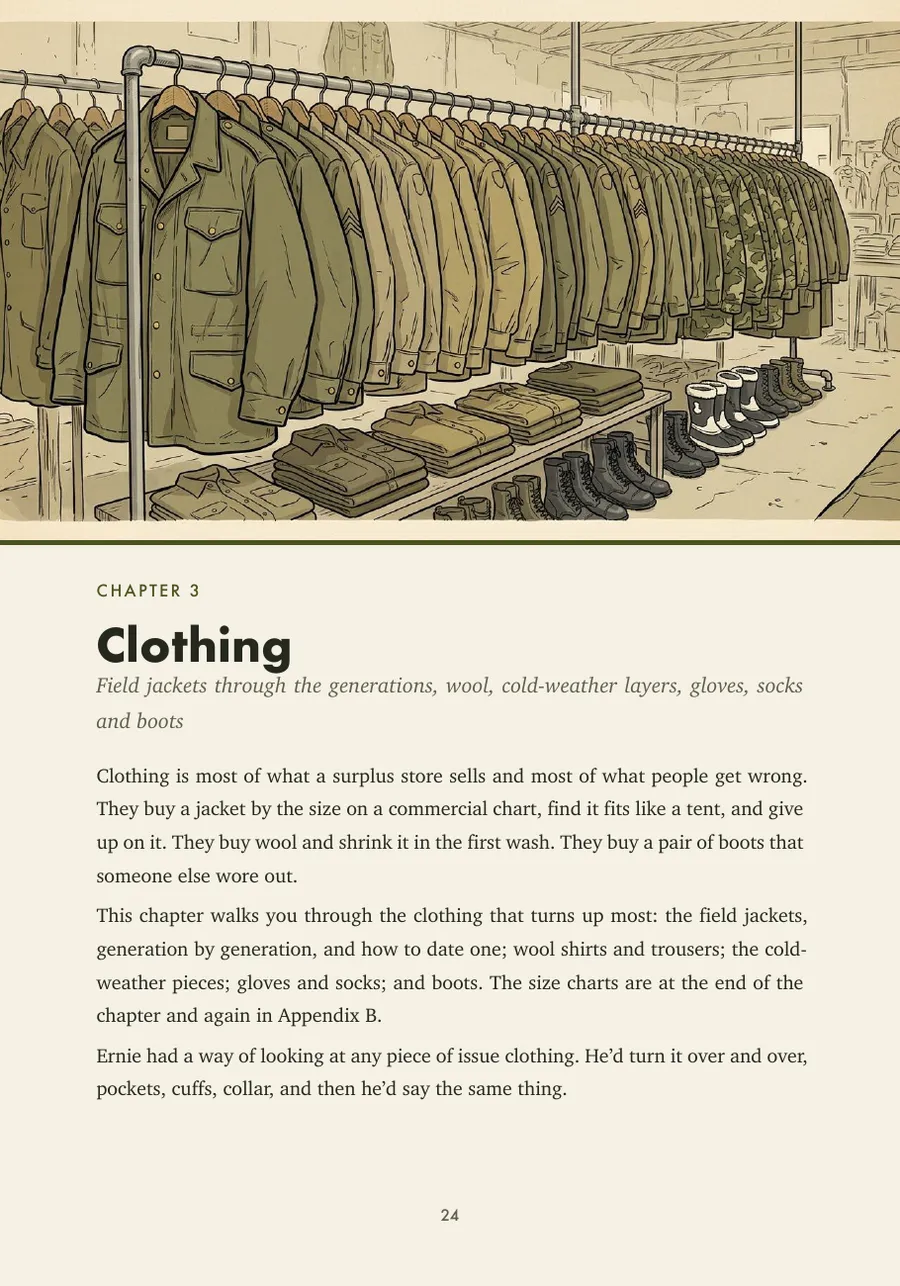
- Field jackets through the generations, from the WWII M-1941 to the M-65, with side-by-side drawings, the dating details and size charts that actually mean something.
- Value tiers for the common pieces what's genuinely worth money, what's worth owning and using, and what's only worth what somebody will pay for it this year. No price list to go stale.
- The short list to leave on the shelf, including old gas-mask filters, helmets bought for protection, perished rubber, and the compass dials with radium in them, each with plain handling advice.
- Staying warm on surplus: the layering system as the army actually used it, wool, poncho liners and modular sleeping bags, and what each piece is for.
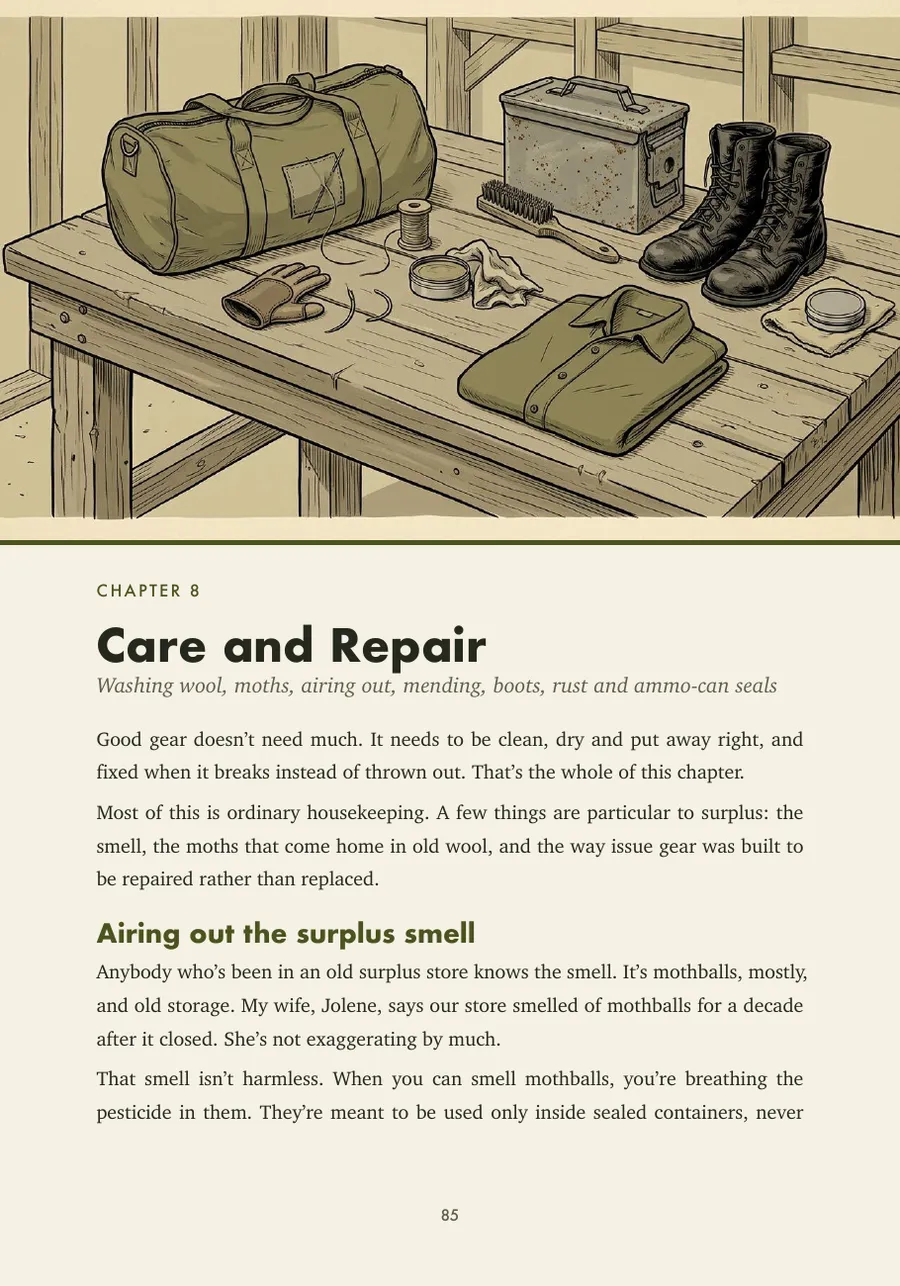
- Making it last: washing wool, beating moths, re-proofing canvas, boot care, rust, ammo-can seals — plus print-and-keep kit lists for the car, the camp and the house.
Four real pages
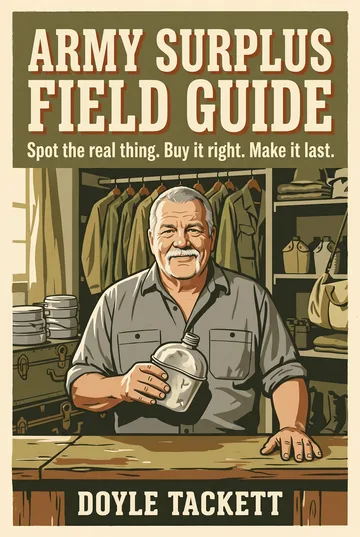
The Army Surplus Field Guide
$29 · PDF · 124 pages · Instant PDF download
Who it's for
- You shop surplus stores, gun shows, flea markets or online listings
- You camp, hunt, or keep a kit in the truck, and you want gear that outlives you
- You've inherited surplus and want to know what it is
- You collect a little and would like to stop guessing
- You're after current-issue equipment — this is the older surplus that actually turns up in stores
- You want a price list: prices go stale in a season, so you get value tiers instead
Everything in the book
- Introduction: The Footlocker
- 1. What Surplus Really Is
- 2. Reading the Label
- 3. Clothing
- 4. Staying Warm on Surplus
- 5. Canvas and Shelter
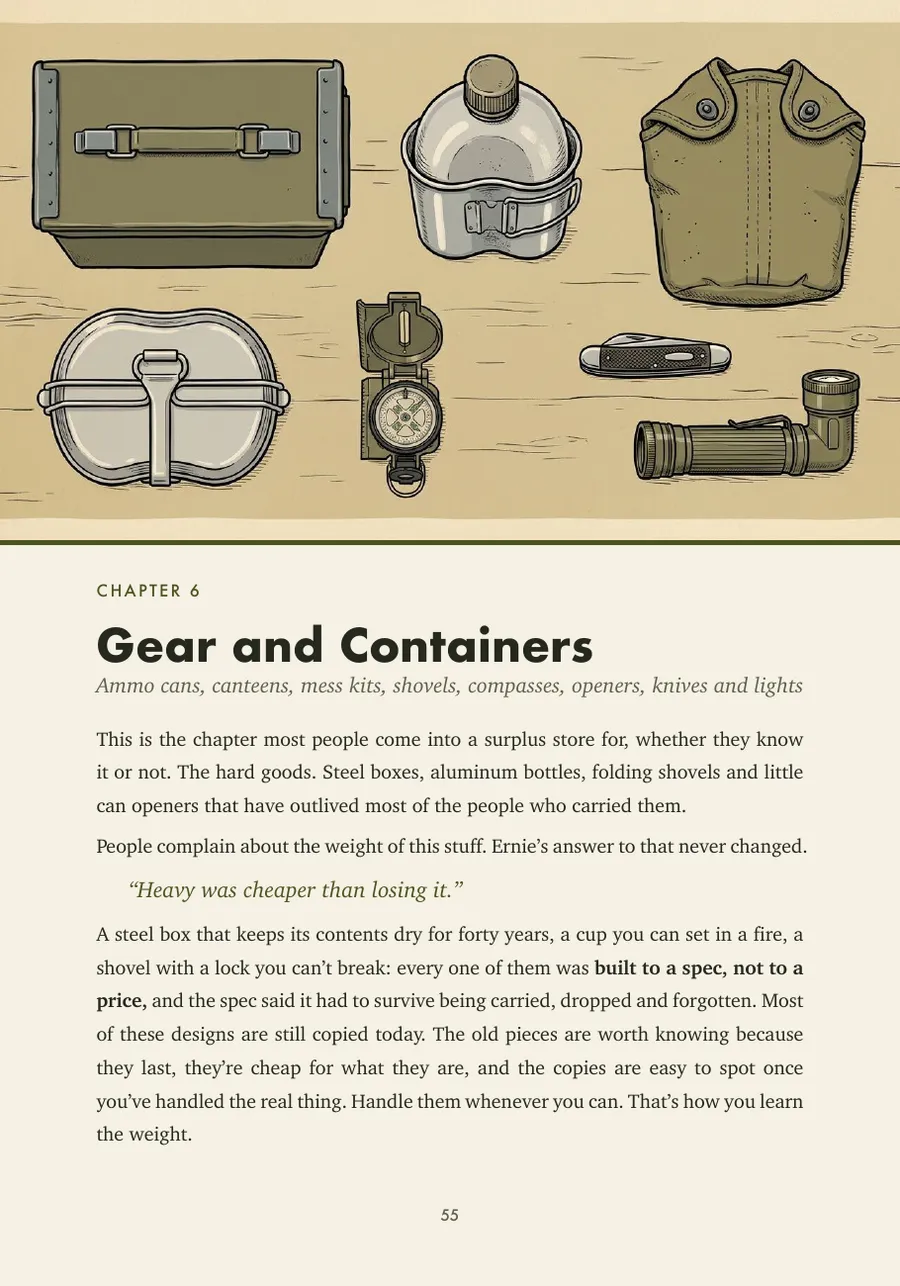
- 6. Gear and Containers
- 7. What to Skip
- 8. Care and Repair
- 9. Where and How to Buy
- 10. Surplus Kits
- Appendix A: Label Decoder (with Dating at a Glance)
- Appendix B: Size Charts
- Appendix C: Printable Checklists (Buyer's Checklist, Winter Car Kit, Camp Kit, Home Emergency Box)
- Appendix D: Words of the Trade
The details
- Format
- Illustrated PDF ebook, full color
- Length
- 124 pages, 15 chapters
- Page size
- 7 × 10 in – reads well on a tablet, computer or phone
- Printing
- Print any page for your own use. Checklists included.
- Copy protection
- None. Download it and keep it.
- Delivery
- Instant. Download straight after you pay.
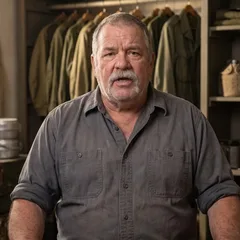
I'm Doyle Tackett. Lawton, Oklahoma.
My father's footlocker came to me in 1994 — a wool blanket, a mess kit, a field jacket and a canteen with a dent in it. Every single thing in it still worked. That's the argument for this kind of gear, and it's most of the reason this book exists. Jolene says our house still smells faintly of mothballs, and she isn't entirely wrong.
Go pick one up.
Read it for 60 days. If it's not for you, I'll refund it.
Email support@oldhands.co within 60 days of buying and you get your money back in full. No questions, no forms, and you keep the file.
Questions
Is this about current military issue?
No. It's about the surplus you'll actually find: the generations of clothing, canvas and hard goods that were built to a specification and are still out there in quantity.
Does it cover foreign surplus?
Only what's common on American shelves. The method — read the label, read the cloth, pick it up — travels anywhere. The tables are American.
I'm buying online, not in a store. Does that still work?
Yes, and there's a section on it. Most of the check is done from photographs if you know which three photographs to ask the seller for.
How do I get it after I pay?
Checkout is handled by Whop, a payments company. The moment you pay, the PDF is in your Whop account to download, and the link is emailed to you as well. You can download it again any time.
Is this a printed book?
No. It's an ebook: a PDF you download straight after paying. You can print any page, or the whole thing, for your own use.
Will it open on my phone?
Yes. It's an ordinary PDF, so it opens on any phone, tablet or computer. A tablet or computer shows the pages best.
What if I don't like it?
Email support@oldhands.co within 60 days and you get a full refund. You don't need to give a reason.
Less than the jacket you were about to overpay for.
$29 once. The label decoder, the size charts and the buyer's checklist are all in the back, made to print and fold into a pocket.
- Instant PDF download
- 60-day money-back guarantee
- No copy protection – yours to keep
One-time payment. Sales tax or VAT is added at checkout where it applies.
Built to a spec, not to a price. Go pick one up.